Trekking Gear for Nepal — Should You Bring It, Buy It, or Rent It in Pokhara?
February 10, 2025
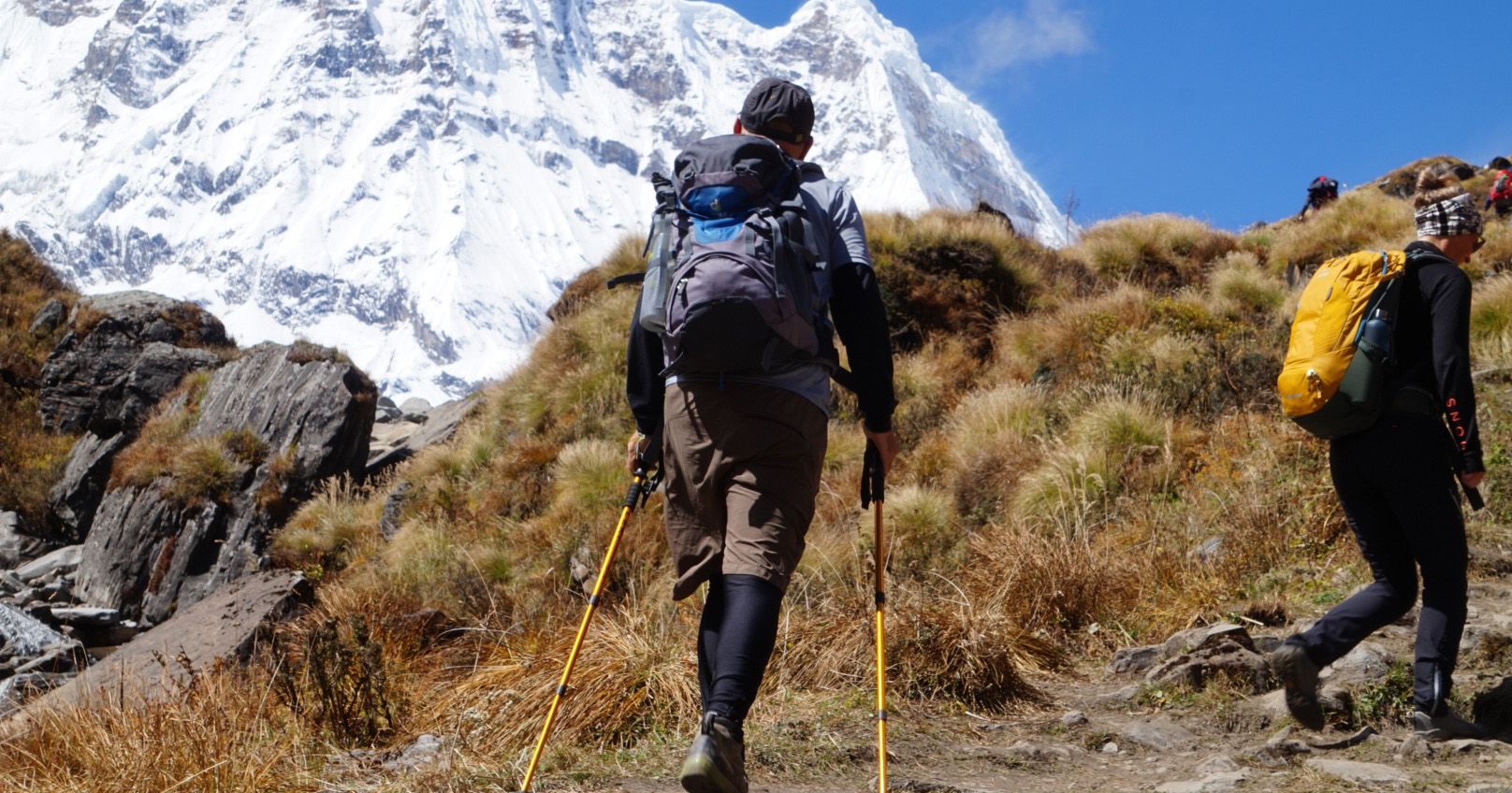
A Question We Hear Every Week
One of the most common things guests ask us before their trek is: should I bring my gear from home, buy it here, or rent it in Pokhara? It is a genuinely good question, and the honest answer depends on how long you are trekking, how often you trek, and how much luggage space you have.
Here is our practical guide to help you decide — based on what we see working best for our guests every season.
Option 1 — Bring Your Gear From Home
If you already own good quality trekking gear that you know and trust, bringing it from home is often the best option. Well-fitted boots, a familiar backpack, and layers you have already tested in the mountains make a real difference on the trail.
The main consideration is luggage. Trekking gear is bulky, and if you are travelling light or combining Nepal with other destinations, carrying it all may not be practical.
Option 2 — Buy Gear in Pokhara
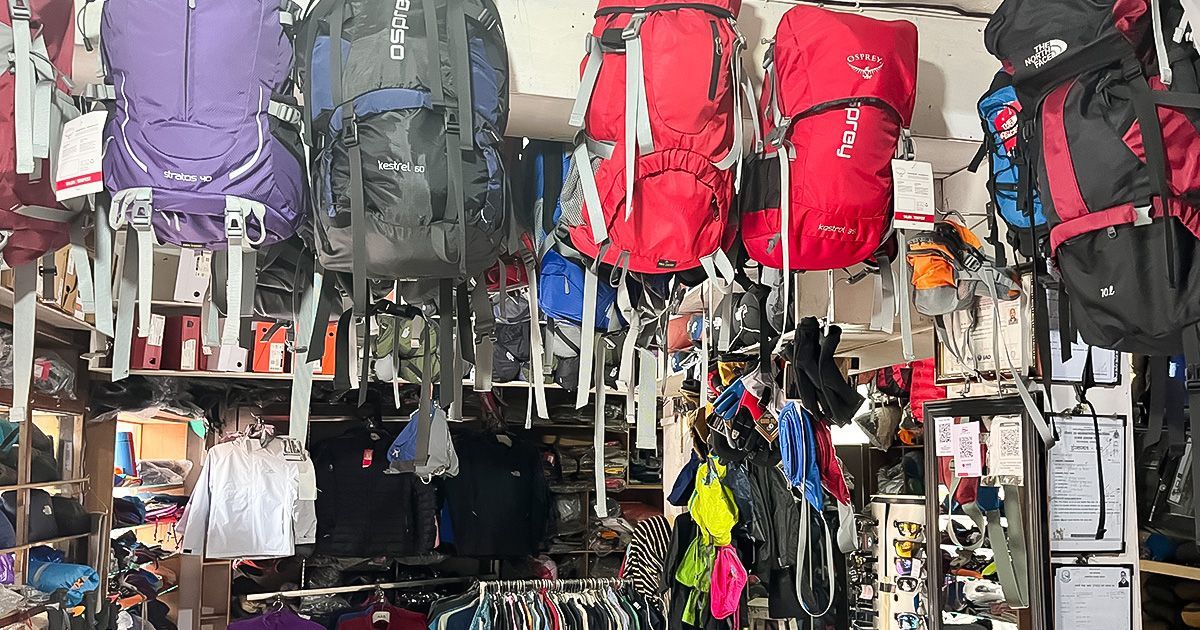
Pokhara has a wonderful selection of trekking gear shops, particularly along the main street in the Lakeside area. You will find everything from well-known international brands to good quality locally made gear at very reasonable prices. If you arrive without something essential, or realise on the trail that you need an upgrade, Pokhara is an excellent place to sort it out. Just allow yourself a little time to browse and compare before you buy.
Pros of Buying
- A perfect, personalised fit — especially important for boots and backpacks
- Long-term investment if you plan to trek again
- Better hygiene than rental gear
- Familiarity with your own equipment from day one
Cons of Buying
- Higher upfront cost, especially for quality brands
- Adds weight and volume to your luggage
- Not practical if you only trek occasionally
Option 3 — Rent Gear in Pokhara
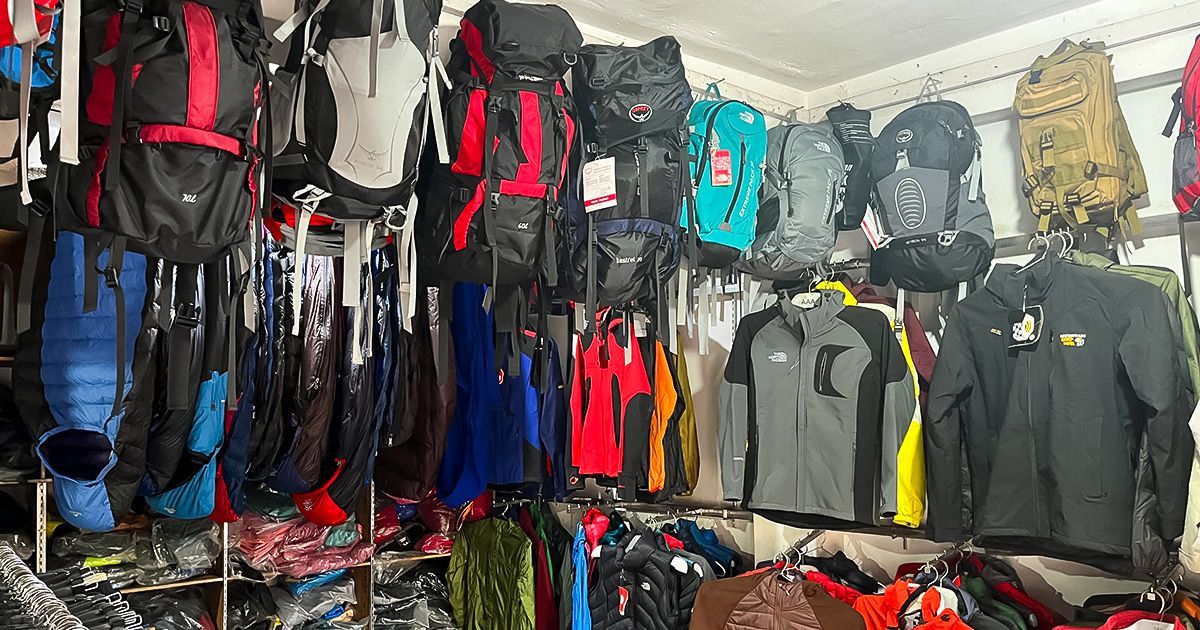
Pokhara's Lakeside area has a large number of well-stocked rental shops, most of them regulated by the Trekking Equipment Shops Association (TESA). For guests who are trekking once or travelling light, renting is a very practical and affordable option.
Pros of Renting
- Much cheaper than buying, especially for bulky items like sleeping bags and down jackets
- No storage or transport hassle when you get home
- Allows you to travel with minimal luggage and avoid airline baggage fees
- A good way to try gear before committing to a purchase
Cons of Renting
- Quality varies between shops — always inspect gear carefully before accepting it
- Hygiene can be a concern for sleeping bags and jackets — we always recommend bringing or renting a sleeping bag liner
- Rental gear may feel unfamiliar, especially boots
- For frequent trekkers, repeated rental costs add up
What Trekking Gear Should You Buy vs. Rent?

Always Buy
- Trekking boots — fit and comfort are non-negotiable, and rental boots lose their shape
- Base layers and socks — for hygiene reasons
- Sunglasses with UV protection
- Backpack — if you trek regularly
Usually Better to Rent
- Sleeping bag — $1.50 to $2.50 per day depending on quality and temperature rating. A sleeping bag liner is strongly recommended for hygiene and extra warmth.
- Down jacket — $1.50 to $2.00 per day. Bulky to pack and one of the most popular rental items in Pokhara.
- Crampons or microspikes — $1.00 to $2.00 per day. Only needed for winter treks or high passes.
- Duffel bag — $1.00 to $2.00 per day. Commonly used for helper-assisted treks.
- Trekking poles — $1.00 to $1.50 per day. Very useful on steep descents and highly recommended.
A Few Practical Tips Before You Rent
Always inspect gear carefully before leaving the shop. Check that sleeping bags have good loft and no unpleasant odour, that zippers work smoothly, and that down jackets still have proper insulation. Reputable shops will not take offence — they expect you to check. We also strongly recommend bringing or buying a sleeping bag liner. It creates a clean barrier between you and the rented bag, adds warmth, and is very easy to pack. Most rental shops will ask for a refundable cash deposit and a copy of your passport. Keep your receipt and return items in good condition to get your deposit back in full.
Where to Find Rental Shops in Pokhara
The best place to rent trekking gear in Pokhara is along the main street in the Lakeside area. There are many shops here offering a wide range of equipment at similar prices. It is worth visiting two or three shops to compare quality and condition before making your choice. If you are unsure where to start, please ask us — we are always happy to point you in the right direction.
Whether you bring, buy, or rent, the most important thing is that your gear is appropriate for your trek and the season. If you are unsure what you need, please do not hesitate to reach out — we are always happy to give honest, practical advice based on your specific plans.
Breathe in. Breathe out. Enjoy Nepal.
Planning a Trek in the Annapurna Region?
Here are our best routes from Pokhara.