Dashain in Nepal — Blessings, Family and the Journey Home
September 27, 2026
Every Autumn, Nepal Begins to Move
There is a time every year when the whole country starts to travel. Buses are full. Airports are busy. The roads leading out of Kathmandu fill with people carrying bags, gifts and children. Some are going to the hills, some to the Terai, some to a small village they left many years ago. Some are coming home from another country. Everyone seems to have somewhere to go.
This is Dashain, the biggest and longest festival in Nepal. It comes in autumn, when the monsoon is over, the sky is clear and the mountains are at their best. For us, Dashain is not about big events or performances. It is about family, blessings from our elders, food shared together, and the feeling of coming home.
We want to share what Dashain means to Nepali people, the stories behind it, and what you can expect if you visit Nepal during this time.
Dashain — The Festival of Going Home
For many Nepalis, Dashain is not only a festival. It is the time of year when you go home. The old house may be small. The road may be difficult. The village may have changed. But somewhere there is usually a mother waiting, an old father, grandparents, brothers and sisters, and a family courtyard where everyone will sit together again. That is why Dashain begins long before the tika is placed on the forehead. It begins with the journey home.
Dashain is the longest festival in Nepal. The traditional cycle lasts fifteen days, from Ghatasthapana to the full moon of Kojagrat Purnima. The most important days are the first, the seventh, the eighth, the ninth and the tenth.
The Stories Behind Dashain
At the heart of Dashain is Durga, the powerful mother goddess. The best-known story tells of a great battle with the buffalo demon Mahishasura. The gods could not defeat him, so their combined power took the form of a goddess. She became Durga, and she fought Mahishasura and defeated him.
That is why Dashain is also called Vijaya Dashami, the day of victory. There is another story connected with the tenth day, the victory of Ram over Ravan. The two stories are different, but they share the same idea: strength, protection, and the hope that good will overcome what threatens life.
Ghatasthapana and the Jamara
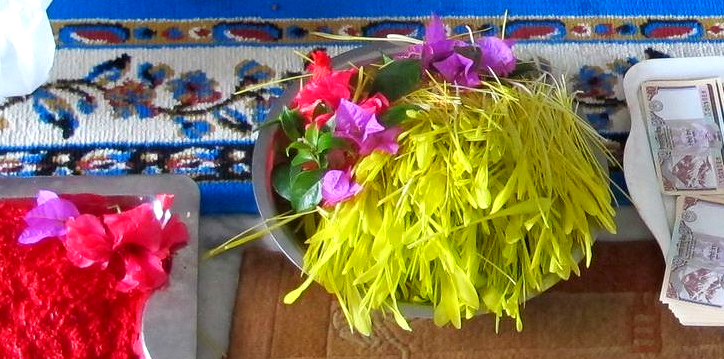
The festival begins quietly. In a corner of the home, a small space is prepared. Seeds, especially barley, are planted in a mixture of soil and sand. They are kept away from sunlight and watered with care. Slowly, the shoots grow and turn a soft yellow. This is Jamara. For the family, these tiny plants are not just grass. They stand for life, growth, prosperity and the blessing of the goddess. While the Jamara grows in the dark, Dashain slowly grows across the whole country.
Phulpati — Flowers From Gorkha
The seventh day is Phulpati, which means a sacred collection of flowers, leaves and plants. In homes, people bring auspicious plants into the worship room. In Kathmandu, there is another story. For more than two centuries, a special Phulpati has been carried from Gorkha to Kathmandu.
This tradition grew after Prithvi Narayan Shah conquered Kathmandu in the eighteenth century and made the old palace his royal centre. Even today, the procession connects Gorkha and Kathmandu. It carries more than flowers and leaves. It carries a piece of Nepal's history: the old kingdom of Gorkha, the rise of the Shah dynasty, and the creation of a new state.
Maha Ashtami and Maha Nawami
On the eighth day, Maha Ashtami, the goddess is worshipped in many homes and temples. In places where animal sacrifice is part of the tradition, animals are offered to her. Not every family does this. For some it is an old religious offering, for others it is a practice they no longer follow, and some families choose symbolic offerings instead.
On the ninth day, Maha Nawami, people worship the tools of their work. A mechanic may worship his tools, a driver his vehicle, a farmer the tools he uses in the fields. The idea is simple. The things that help us live and work are also placed under the protection of the goddess. In Kathmandu, some temples inside the old royal palace that are normally closed may open to the public on this day.
Vijaya Dashami — The Day of Tika
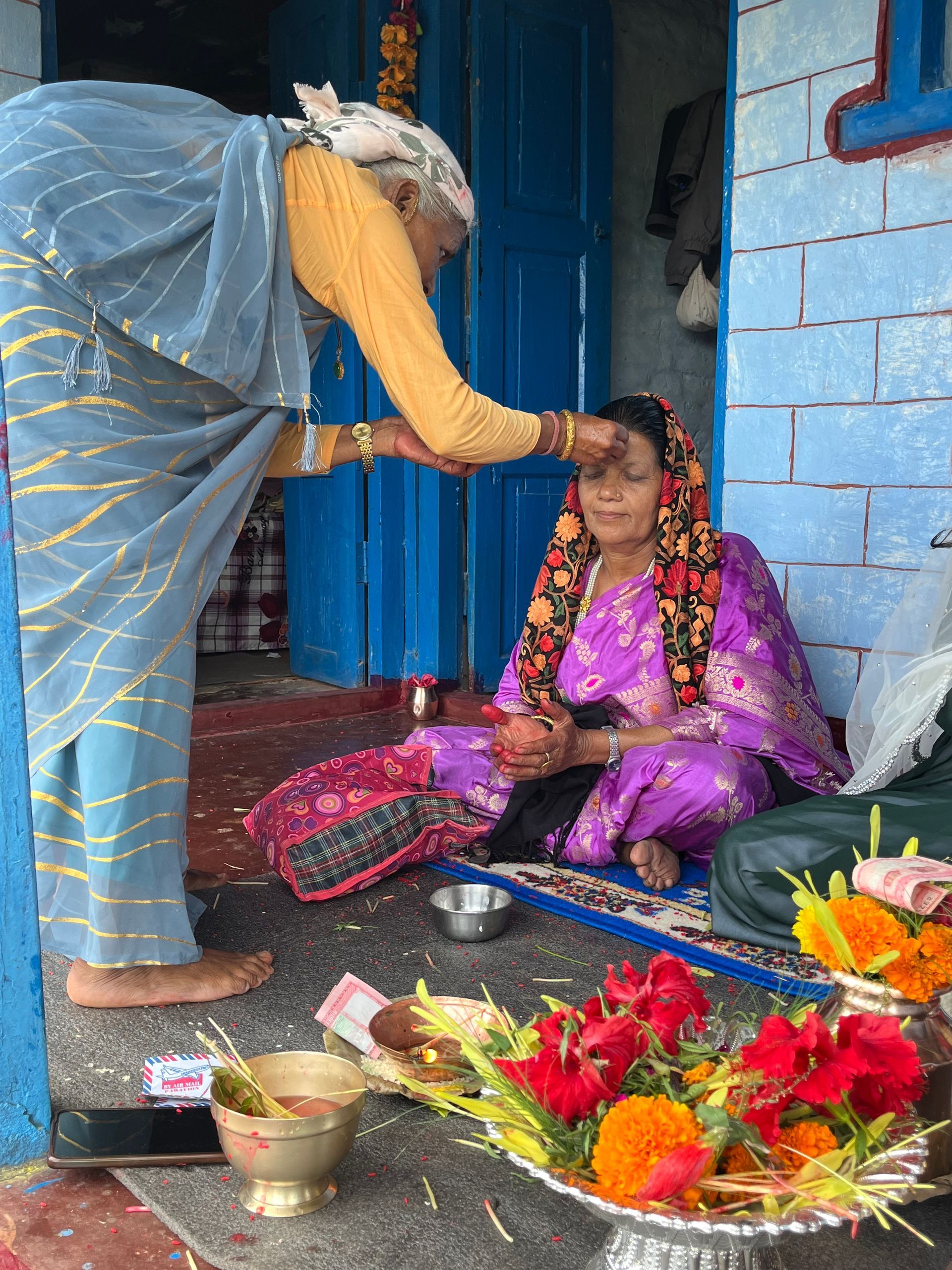
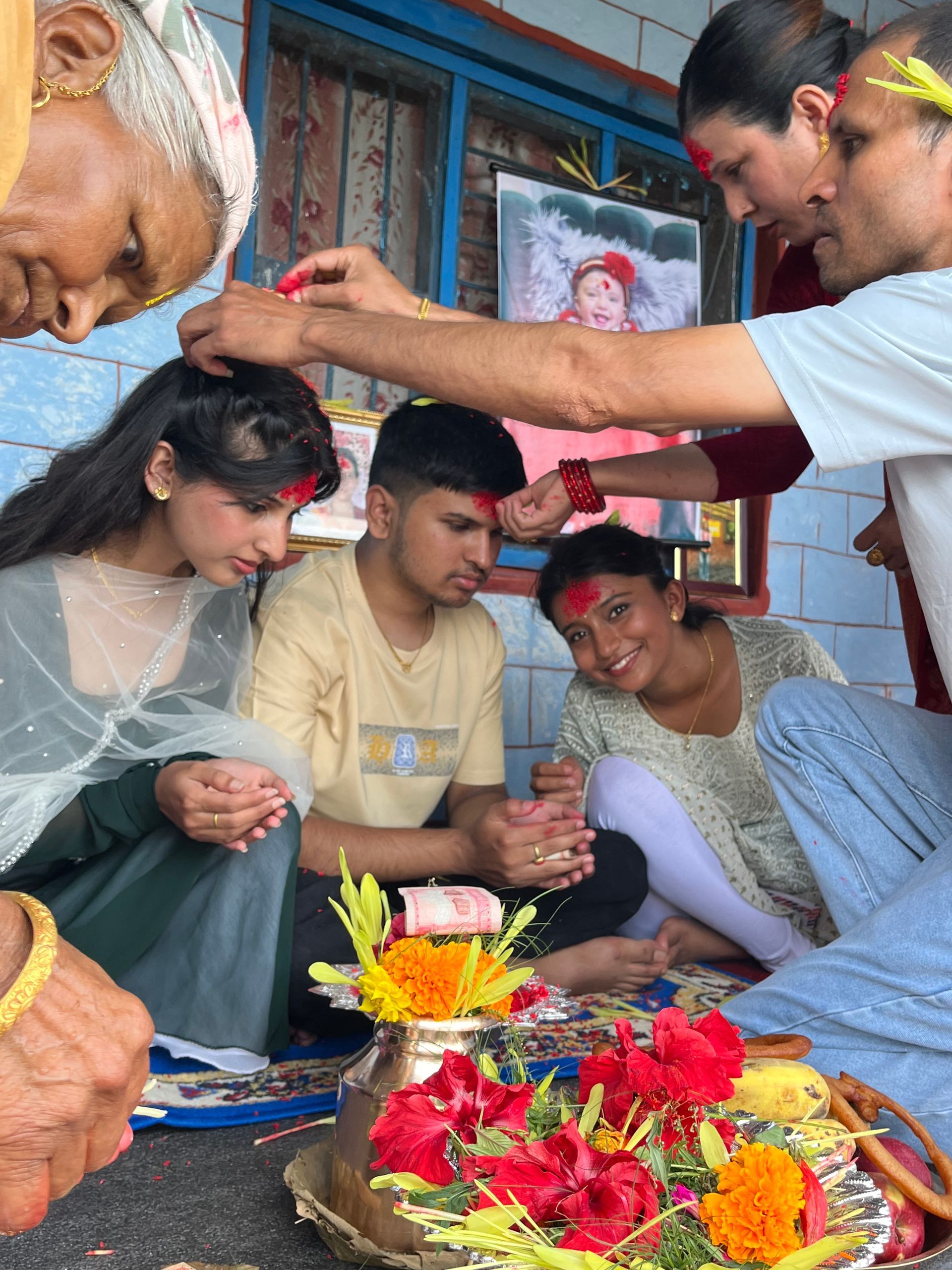

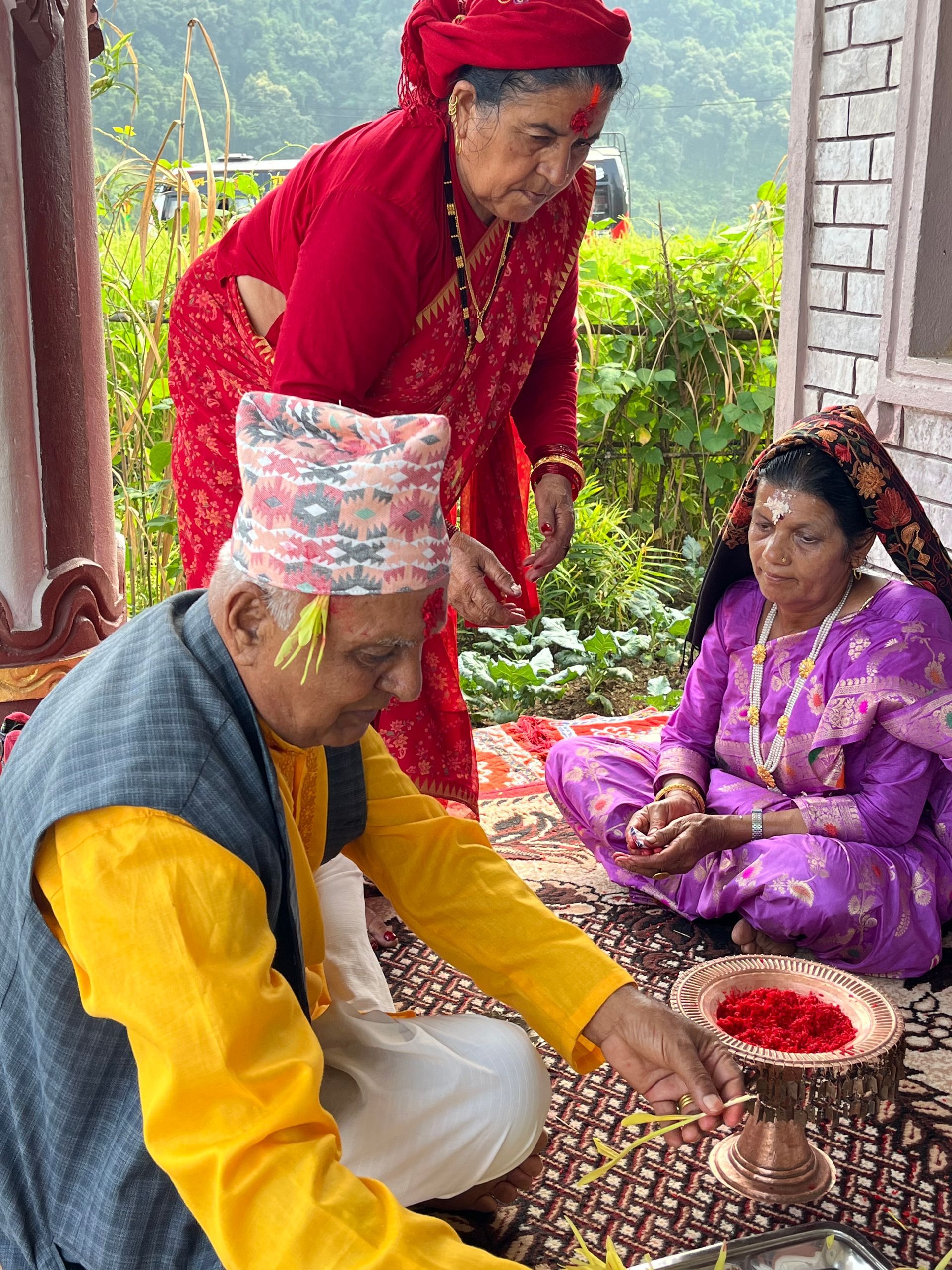
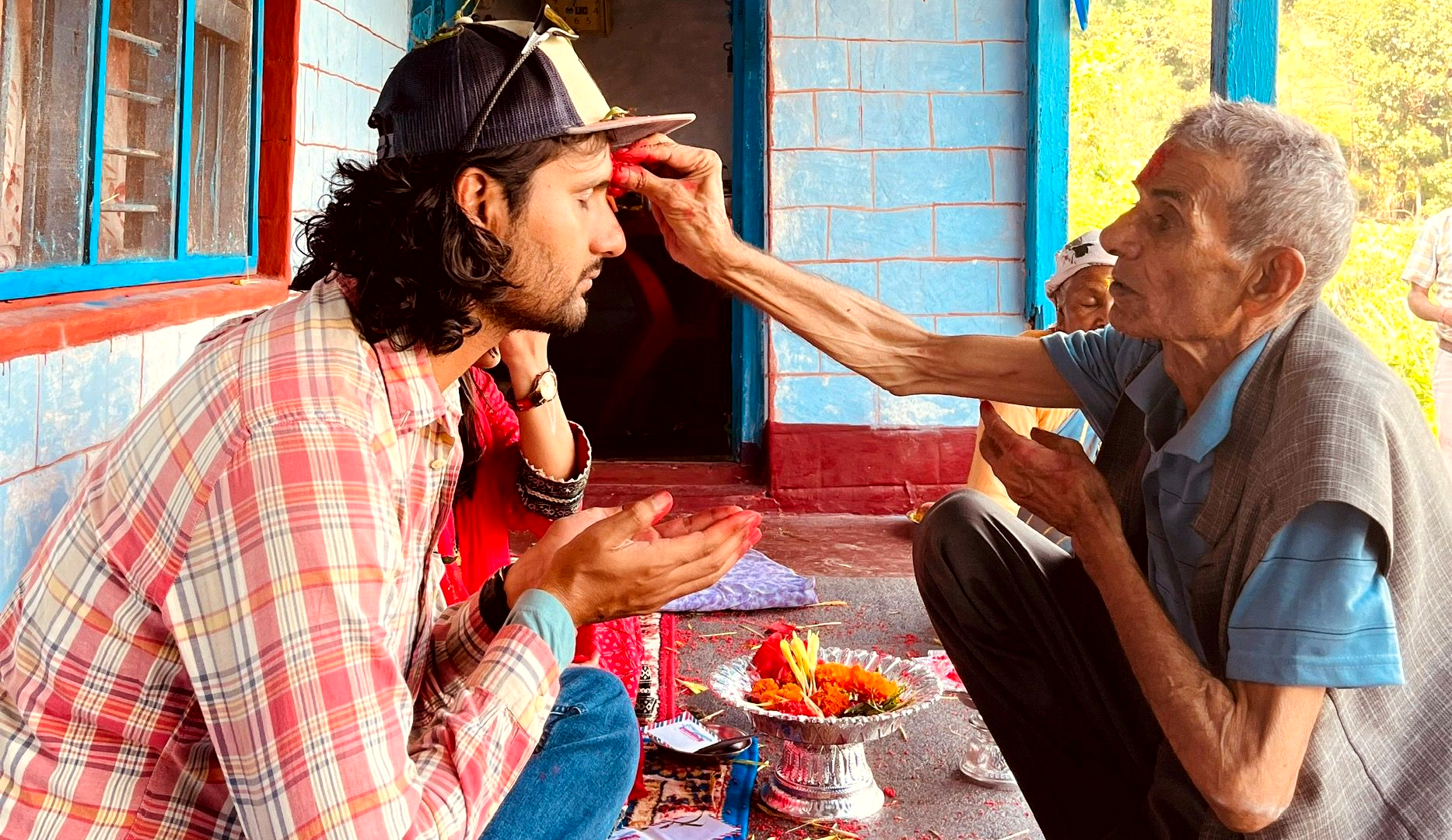
Then comes the day most people remember. The tenth day. The day of tika. The house becomes full. The elders sit down, and the younger ones wait for their turn. A red tika is prepared from rice, yoghurt and vermilion. Jamara is placed on the head, and blessings are given. The words change from family to family, but the meaning is the same. May you live long. May you be healthy. May you be prosperous. May your life be protected.
Sometimes the most emotional moment is not the tika itself. It is seeing someone who has travelled for many hours finally sitting in front of an elderly parent. A son who lives abroad. A daughter who works in Kathmandu. A grandson meeting his grandparents. For one day, distance becomes smaller.
Swings, Kites and Full Kitchens
In the villages, the kitchen becomes busy. Meat is prepared, rice is cooked, and children wear new clothes. Relatives arrive, and people sit together and talk late into the night. In the countryside, the old bamboo swing, called ping, may still be raised, and children and adults take turns swinging high above the ground. Kites fill the autumn sky in many places. For a few days, ordinary life can wait.
Not Everyone Celebrates Dashain the Same Way
Nepal is home to many peoples and many belief systems, and not every community sees Dashain as a festival of its own tradition. Among the Kirat peoples, festivals such as Ubhauli and Udhauli hold deep importance. Among the Tamang, Lhosar is a major celebration. The Gurung, Magar, Tharu, Rai, Limbu and many other communities also have their own histories and festivals.
The reality is not simple. Some families celebrate Dashain deeply. Some celebrate it mainly as a family festival. Some have adapted it to their own traditions. Some do not celebrate it at all, and some communities have chosen to distance themselves from it, because they see it as part of a history where Hindu culture and the state were closely connected. Even inside one community, one family may celebrate differently from another. Over the centuries, people have changed Dashain and given it their own meanings. That is how a festival becomes part of everyday life.
Dashain 2026 — The Dates
Dashain follows the lunar calendar, so the dates change every year. These are the dates for 2026, based on the official Nepali calendar for the year 2083.
- Ghatasthapana: 11 October, the first day, when the Jamara is planted
- Phulpati: 17 October
- Maha Ashtami: 18 October
- Maha Nawami: 20 October
- Vijaya Dashami (main tika day): 21 October
- Kojagrat Purnima: 25 October, the full moon that closes the festival
If you are planning your trip around these dates, please do not hesitate to reach out. We are happy to help you plan.
Visiting Nepal During Dashain
Dashain falls in the middle of the autumn trekking season, one of the best times of the year to be in the mountains. You can read more about this on our Trekking Seasons and Annapurna Trekking Weather pages. But Dashain is a family festival, not a tourist event, and it helps to know a few things before you come.
Plan Your Travel Early
In the days before Vijaya Dashami, half the country is on the move. Buses fill up, domestic flights become expensive and hard to find, and the highways are crowded. Please book your transport early, especially between Kathmandu and Pokhara. Our blog on getting from Kathmandu to Pokhara explains the options. During the main Dashain days, Kathmandu becomes unusually quiet, and some shops and offices close.
Where to Experience Dashain
In Kathmandu, Hanuman Dhoka shows the public side of Dashain, where the old royal traditions are still visible. Gorkha Durbar helps you understand the story of Phulpati and the Shah dynasty.
But if you really want to understand Dashain, leave the city. Go to a village where families still gather around the old house. On a trek in autumn, you may see a bamboo swing in a village square or elders preparing tika. Our Millennium Trek, with homestays in traditional villages, is one gentle way to be close to village life.
Celebrate With a Nepali Family
If you are in Pokhara during Dashain and trekking with us, we would be happy to take you to a family celebration. You can sit with the family, watch the elders prepare the tika, share the festival food and feel how these days are lived in a real Nepali home. It is not a show made for visitors. It is a family day, and you are welcome to be part of it.
Please let us know when you book your trek, so we can plan the visit around the festival days and your trekking schedule. If you have any questions about it, please do not hesitate to reach out.
Being a Respectful Guest
If a family invites you to share tika or a festival meal, it is an honour. Simply accept with respect and follow what the family does. Please ask before taking photos of people during rituals, and remember that animal sacrifice is part of Dashain in some places. You do not have to watch, but please do not judge a tradition that has deep meaning for many families. Our blog on Nepal Etiquette has more simple tips for visiting temples and homes.
Home, Near and Far
Dashain is a time of joy, but it does not feel the same for everyone. Not everyone has a happy home to return to. Some people have lost their parents. Some cannot afford to travel. Some work far away, and millions of Nepalis now live abroad and can only call home. For them, Dashain brings both happiness and longing. A video call becomes the place where tika is shared, and a photograph takes the place of someone who could not return.
And after the tika days are over, people leave again. The bags are packed, the buses fill, and the old parents stand at the door. But something has been renewed. For another year, Dashain has reminded Nepal of something very simple: no matter how far you go, there is still a place you call home.
If you are in Nepal during these days, you will see a side of our country that no mountain view can show you. If you would like to know more about Dashain, or about trekking during this season, please do not hesitate to reach out. We are always happy to talk about our traditions.
Breathe in. Breathe out. Enjoy Nepal.
Coming to Nepal for Dashain?
Many of our guests trek just before or after the festival days, when the mountains are clear and the villages are still full of life. Here are our favourite treks from Pokhara.