Tihar in Nepal — Light, Animals and the Bond of Family
October 26, 2026
When the Lamps Begin to Glow
There is a different feeling in Nepal when
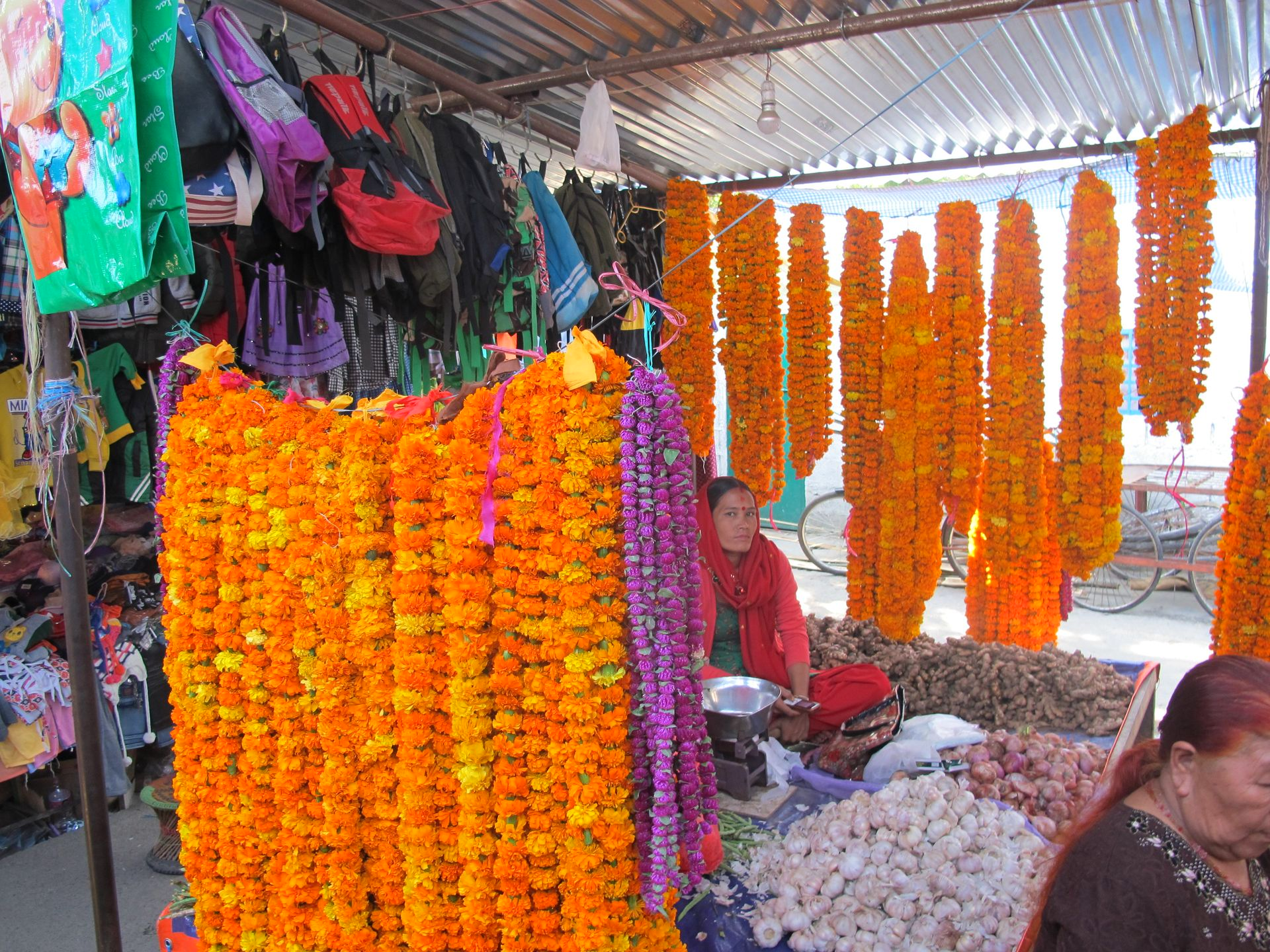
Tihar arrives. The days become shorter, but the evenings somehow brighter. Almost every house begins to change. Marigold garlands appear around doors and windows. Small oil lamps, called diyo, glow along the steps. In the streets, you hear children singing, drums beating, and groups of young people walking from one house to another.
Tihar comes a few weeks after Dashain, and it is the second great festival of the Nepali autumn. You can read about the first one in our blog on the Dashain Festival in Nepal. But Tihar has its own feeling. It is a festival about life and death, animals and people, wealth and work, and the love between brothers and sisters.
We want to share what these five days mean to us, the stories behind them, and what you can expect if you are in Nepal during this time. If you have any questions while reading, please do not hesitate to reach out.
Tihar — Five Days of Light
Tihar is also called Yamapanchak, the five days connected with Yama, the god of death. The stories behind it are old, and like many festivals in Nepal, there is not one single explanation that belongs to everyone. Each of the five days has its own name and its own meaning.
The Story of Yama and Yamuna
One of the best-known stories tells of Yama and his sister Yamuna. Yama was always busy with the world of the dead, and Yamuna wanted her brother to come and visit her. When he finally came, she welcomed him with food, flowers, oil and tika. She asked him to stay until the garland around his neck had dried, the oil had disappeared and the tika had faded. In this story, a sister’s ritual for her brother became a wish for a long life. That is why Tihar ends with Bhai Tika.
But before brothers and sisters sit together, Tihar takes us through four other days.
Kaag Tihar — The Day of the Crow
The crow is not usually the bird people invite into their homes. But on the first day of Tihar, food is placed outside for crows. In traditional belief, the crow is connected with Yama and carries messages from the world of death. Feeding it is a way of remembering life, death, and the uncertainty around us.
Kukur Tihar — The Day of the Dog
On the second day, dogs receive the attention they rarely get during the rest of the year. Street dogs and pet dogs alike are given a flower garland, a tika and good food. There is an old belief that dogs guard the road between life and death. There is also something simpler behind it. Dogs have lived beside us for generations, guarding our houses and walking with us on our journeys. For one day, the dog is the honoured guest.
This is one reason Tihar feels different from many other festivals. It does not only ask people to worship a god. It asks them to notice the animals living around them.


Gai Tihar and Laxmi Puja
In most years, the cow is honoured on the morning of the third day with garlands, tika and special food. In the evening comes the most famous night of Tihar:
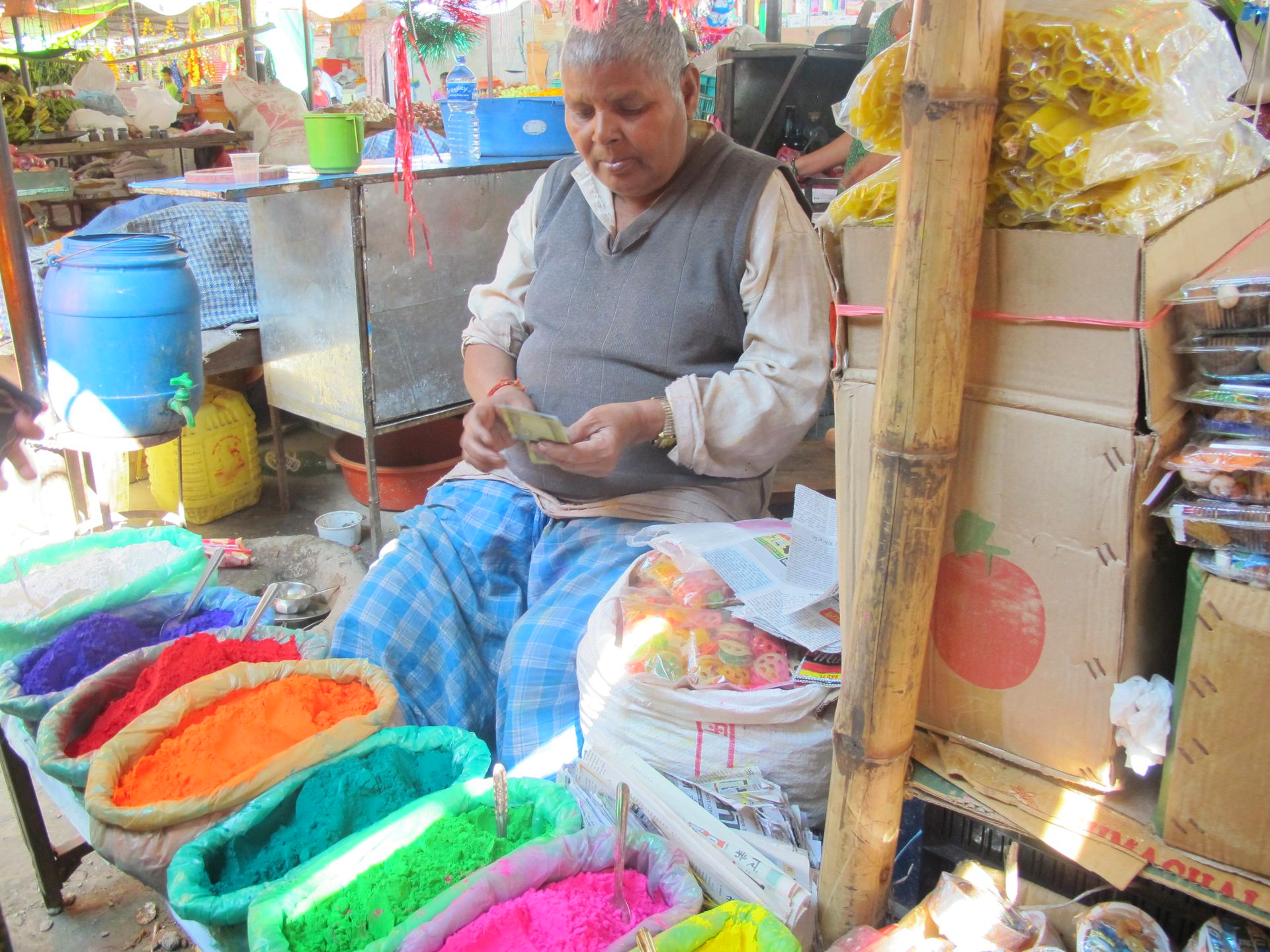
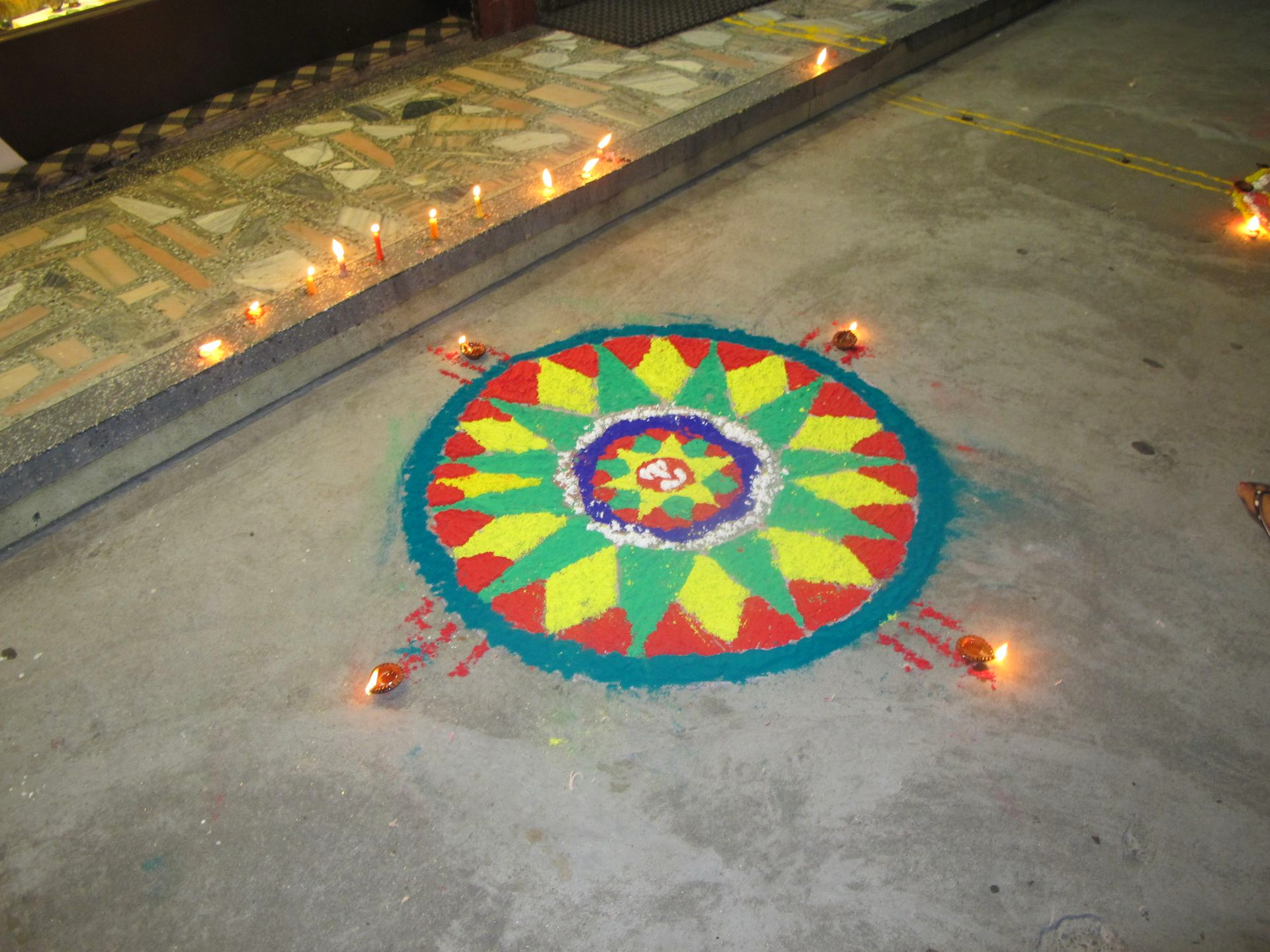
Laxmi Puja. The house is cleaned. Doorways are decorated with flowers, and colourful patterns called rangoli are made near the entrance. Lamps are placed along windows, doors and courtyards, leaving a path of light into the house to welcome Laxmi, the goddess of wealth and prosperity.

Deusi and Bhailo
Then the neighbourhood begins to sing. Bhailo and Deusi groups move from house to house, singing, dancing and offering blessings for happiness and prosperity. The household gives them food, sweets or money, and the group moves on to the next home. In many places, the money collected supports schools, clubs, temples or other local needs. For visitors, this is one of the easiest ways to feel the social side of Tihar. You do not need to enter a temple. You can simply stand in a quiet street and watch a neighbourhood celebrate together.
Mha Puja and the Newar New Year
On the fourth day, oxen are honoured in many parts of Nepal, because they have always carried much of the hard work of farming. Some communities also observe Govardhan Puja. In the Kathmandu Valley, Newar families celebrate Mha Puja, the worship of the self. A mandala is prepared on the floor for each member of the family, with lamps, flowers and food around it, and each person receives blessings for health, strength and a good life. It is a beautiful idea: before asking for wealth from outside, remember the life and body that make everything else possible. Mha Puja also marks the beginning of Nepal Sambat, the traditional Newar calendar, which is more than a thousand years old. Newar tradition connects its beginning with Shankhadhar Sakhwa, who is remembered for freeing people from debt. In 2026, the Newar year 1147 begins.
Bhai Tika
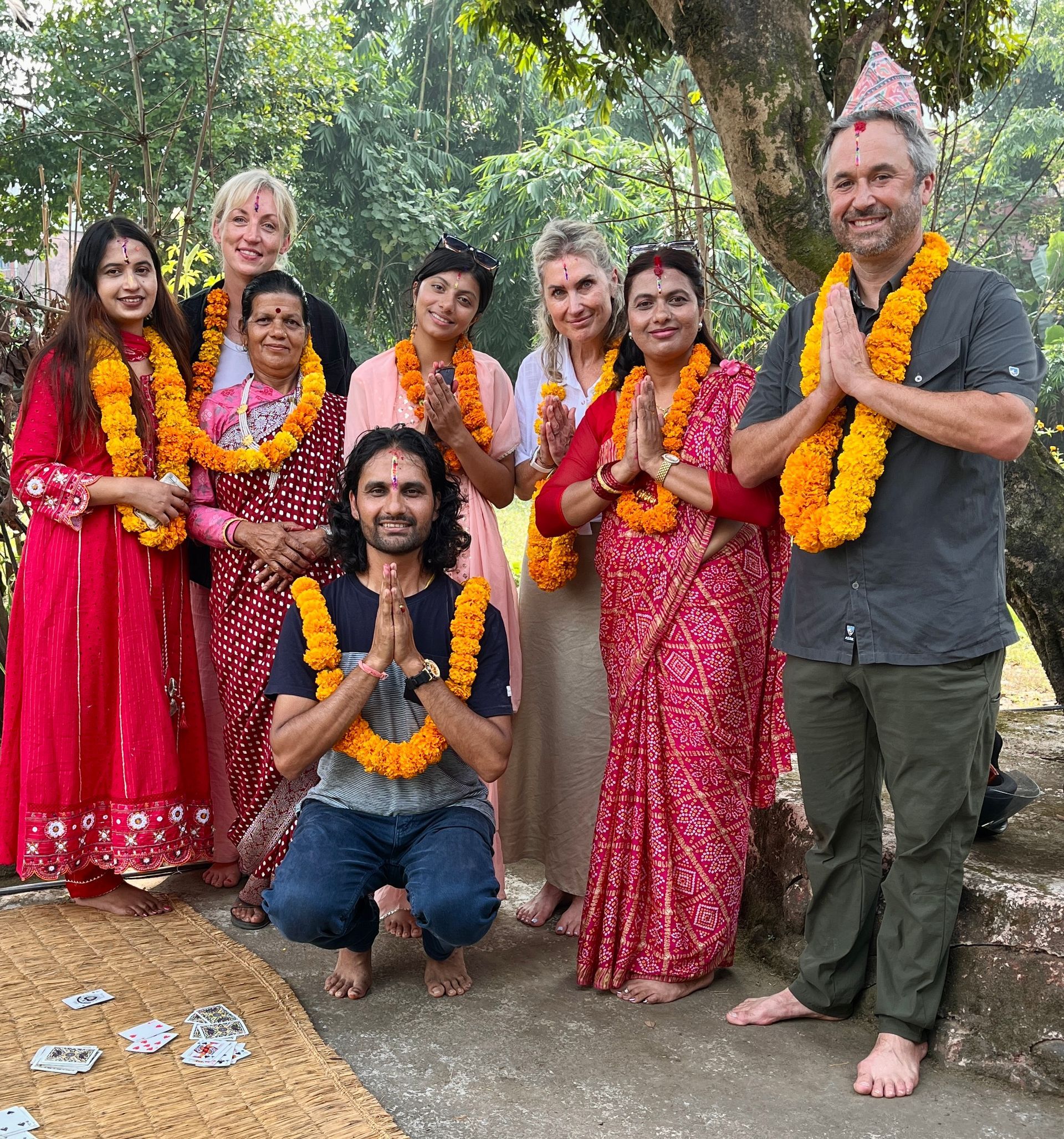
On the fifth day, the feeling becomes more personal. Sisters and brothers sit together. The sister places a tika on her brother’s forehead, usually in seven colours, and offers food and blessings for a long and prosperous life. The brother gives gifts in return. The makhamali flower is used in the garland, because it stays fresh for a long time and has become a symbol of long life.
For families separated by distance, this can be an emotional day. People travel across Nepal to be home again, and the buses are full once more. Families living abroad connect through phone and video calls. A brother may not be able to sit beside his sister, but the meaning of the ritual still travels across the distance.

One Festival, Many Faces
Tihar does not look the same everywhere in Nepal. In Kathmandu, Patan and Bhaktapur, Newar families observe it as Swanti, with detailed household rituals. In the Madhesh, it is often called Dipawali, closer to the wider South Asian tradition of Diwali. In the hills and mountains, families celebrate with their own foods, songs and customs.
In many homes, the kitchen is busy for days. Families make sel roti, a sweet ring of fried rice bread that belongs to every festival table. In some villages, Deusi and Bhailo are the heart of the celebration. Some families follow every ritual, others celebrate more simply. That is normal in Nepal. A festival can travel from one valley to another and still become something local.
Over time, electric lights have joined the oil lamps, and many Deusi and Bhailo groups now carry speakers with them. But when evening comes and a small lamp is placed beside a doorway, the old feeling is still there. Tihar is not something Nepal puts on for visitors. It is something Nepal does for itself.
If you have questions about Tihar, please do not hesitate to reach out.
Tihar 2026 — The Dates
Tihar follows the lunar calendar, so the dates change every year. These are the dates for 2026, based on the Nepali calendar for the year 2083.
- Kaag Tihar: 7 November
- Kukur Tihar and Laxmi Puja: 8 November (this year both fall on the same day, so Laxmi Puja comes one evening earlier than usual)
- Gai Tihar: 9 November
- Govardhan Puja, Goru Puja and Mha Puja: 10 November
- Bhai Tika: 11 November
If you are planning your trip around these dates, please do not hesitate to reach out. We are happy to help you plan.
Visiting Nepal During Tihar
Tihar falls in the middle of the autumn trekking season, when the sky is often at its clearest. It is also one of the busiest times on the trails, so it helps to book your trek early. You can read more about this on our Trekking Seasons and Annapurna Trekking Weather pages. Like Dashain, Tihar is a family festival, not a tourist event, and it helps to know a few things before you come.
Travel During Tihar
Travel is usually easier during Tihar than during Dashain, but the days around Bhai Tika can be busy again, as people go home to their brothers and sisters. Some shops and offices close on the main festival days. If you need to travel between Kathmandu and Pokhara at this time, please book early. Our blog on getting from Kathmandu to Pokhara explains the options.
Where to Experience Tihar
If you can choose only one evening, choose Laxmi Puja. In Kathmandu, walk through an old Newar neighbourhood in Patan or Bhaktapur. Wait until the sun goes down, then walk slowly. Look at the lamps, listen to the singing, and notice the flowers around the doors.
In the hills, stay in a village where Deusi and Bhailo are still community events, not performances arranged for visitors. Our Millennium Trek, with homestays in traditional villages, is one gentle way to be close to village life.
Celebrate With a Nepali Family
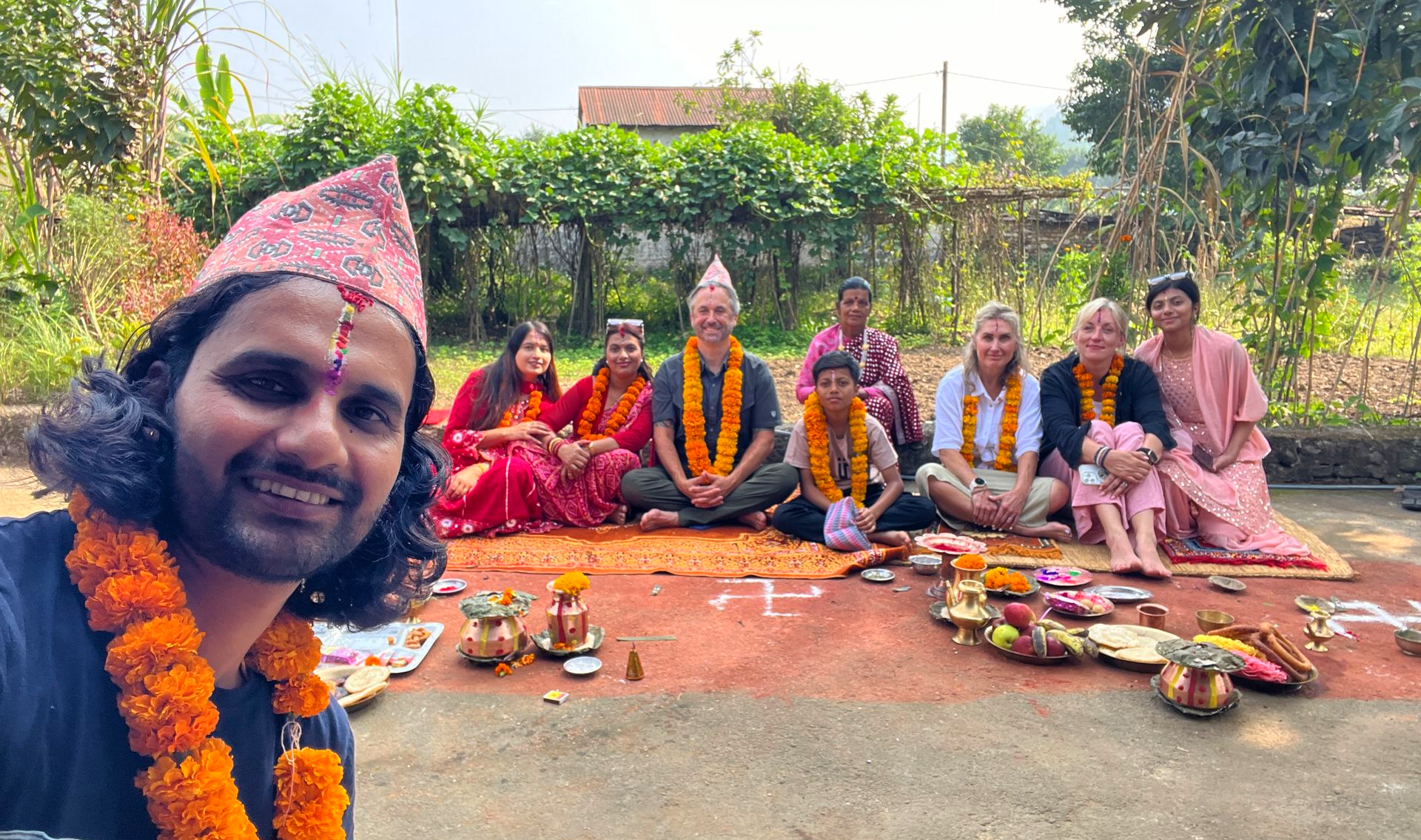
If you are in Pokhara during Tihar and trekking with us, we would be happy to take you to a family celebration. You can sit with the family, see how the house is prepared for Laxmi, share the festival food and feel how these days are lived in a real Nepali home. It is not a show made for visitors. It is a family day, and you are welcome to be part of it.
Please let us know when you book your trek, so we can plan the visit around the festival days and your trekking schedule. If you have any questions about it, please do not hesitate to reach out.
Being a Respectful Guest
If a family invites you to share tika or a festival meal, it is an honour. Simply accept with respect and follow what the family does. When Deusi or Bhailo singers come to the door, it is kind to give a small amount of money or sweets, as the family does. Please ask before taking photos of people during rituals. Our blog on Nepal Etiquette has more simple tips for visiting temples and homes.
The Light We Create Together
When evening comes during Tihar, you can feel the whole country slow down. Someone is waiting for prosperity to enter the house. Someone is remembering a brother or sister far away. Someone is feeding a dog, or putting food out for a crow. Someone is sitting in front of a mandala and thinking about the life they have been given. And somewhere in a village, a group of young people is walking down a dark road, carrying songs from one house to the next.
That is Tihar. Not just a festival of lights, but five days in which Nepal remembers that life is connected: people, animals, work, family, and the light we create together. If you would like to know more about Tihar, or about trekking during this season, please do not hesitate to reach out. We are always happy to talk about our traditions.
Breathe in. Breathe out. Enjoy Nepal.
Coming to Nepal for Tihar?
Many of our guests trek just before or after the festival days, when the mountains are clear and the villages are full of light. Here are our favourite treks from Pokhara.