First Time in Nepal: What We Tell Every Guest Before They Land
July 19, 2026
Your First Hours in Nepal, Made Simple
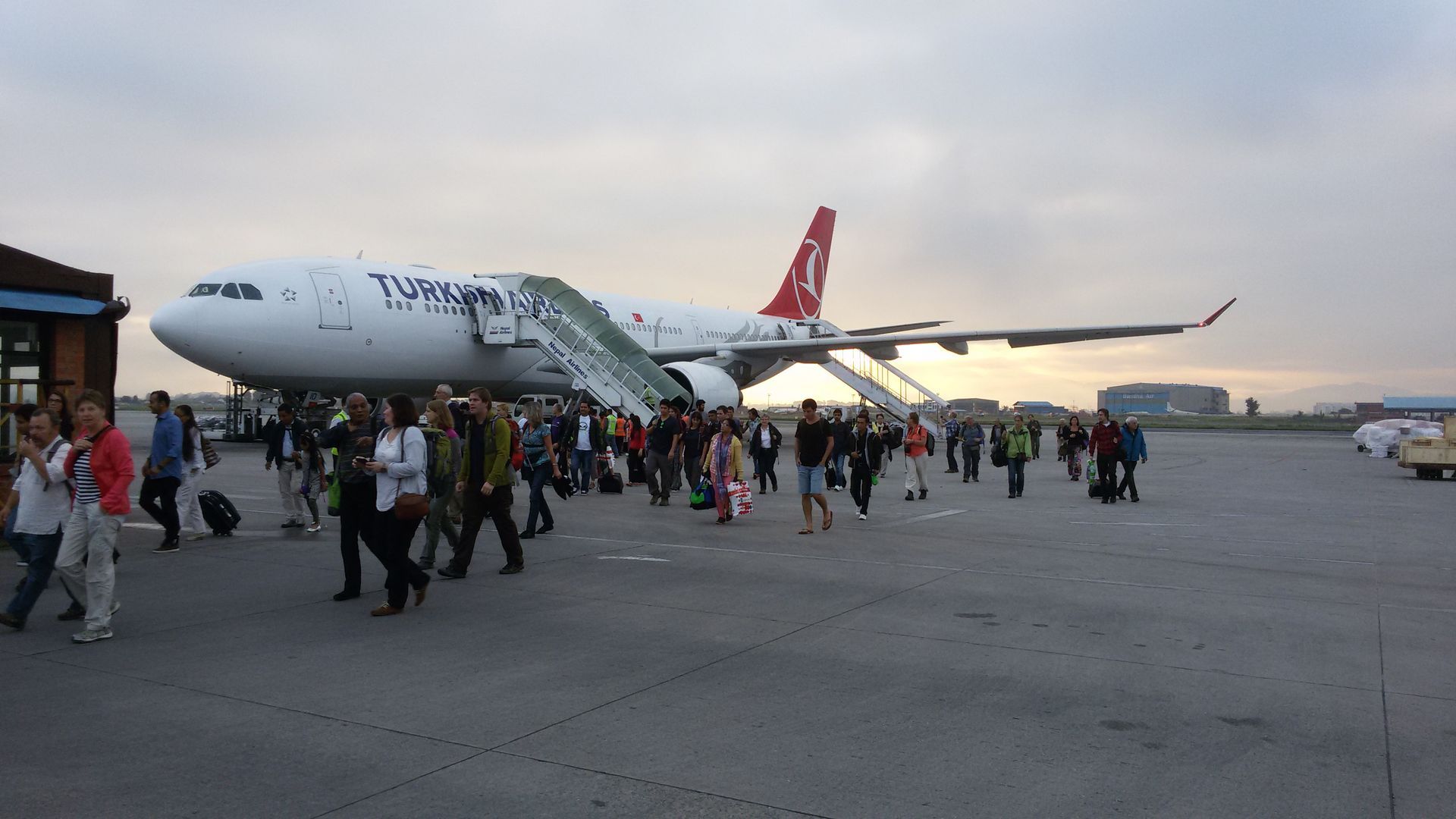
Landing in a new country for the first time can feel like a lot, new sights, new sounds, and a hundred small questions before you even reach your hotel.
We want your first hours in Nepal to feel simple and welcoming, so here is everything you need to know about getting from the airport to Kathmandu or Pokhara, your visa, and your SIM card, before your trek even begins.
Landing in Kathmandu
Tribhuvan International Airport in Kathmandu is usually the first place your feet touch Nepali ground. Taxis are easy to find right outside, but the drivers closest to the exit tend to charge more. We always suggest walking a short distance further before agreeing on a fare.
A fair price for a one way trip into Thamel, the main tourist area, is between 700 and 1,200 Nepali rupees, roughly 5 to 9 US dollars. Very early in the morning or late in the evening, the price can be slightly higher. Prices are always negotiable, so agree on the amount before you get in. A tip of ten to fifteen percent for the driver is appreciated, though never required.
If anything about your arrival feels uncertain, please write to us before you fly, we are happy to talk you through it.
Getting a Local SIM Card
A local SIM card makes your stay much easier, for maps, messages, and staying in touch with family back home. The two main providers are Nepal Telecom, which has strong coverage even in more remote areas, and Ncell, known for good 4G speeds in the cities.
You can buy one at the airport, though prices there are a little higher, or at an official store in Kathmandu or Pokhara for a better plan. Either way, bring these with you.
- Your passport, plus a photocopy
- Two passport sized photographs
- A copy of your Nepali visa or entry stamp
Not sure which provider makes sense for your trip. Ask us, we use both ourselves.
Getting Your Visa on Arrival
Most travellers can get their visa right at the airport, which makes things simple. You fill out an arrival card when you land, then complete a visa application, either online in advance or at one of the airport kiosks.
The current fees are:
- Fifteen days: 30 USD
- Thirty days: 50 USD
- Ninety days: 125 USD
For current visa fees and requirements, please check the official website of Nepal's Department of Immigration before you travel.
If you are unsure how many days to choose for your trek, write to us first, we can help you plan the right length.
Arriving in Pokhara
Many of our treks start from Pokhara, so if you are flying or taking the bus in from Kathmandu, taxis are waiting outside the airport and the bus station too.
A taxi from Pokhara airport into Lakeside, where most guests stay, costs around 1,200 Nepali rupees, about 12 US dollars.
From the bus station it is closer to 400 rupees, about 4 US dollars. Both are negotiable, and again, a small tip for the driver is always appreciated.
If you are still deciding between flying or taking the bus from Kathmandu, we wrote a separate guide on getting from Kathmandu to Pokhara that walks through both options.
If you let us know your arrival details ahead of time, we are also happy to arrange your pick up ourselves.
A Few More Things Worth Knowing
Beyond the airport, a handful of small things make a real difference for a first visit.
Money and ATMs
ATMs are widely available in Kathmandu and Pokhara, though it is wise to carry some cash for smaller towns and villages along the trek, where machines are rare. We ask for payment in cash once you arrive, in Nepali rupees, US dollars, British pounds, or euros.
Tipping
Tipping is not required in Nepal, but it is a meaningful way to thank your guide, helper, and drivers for their work. It is not always clear how much feels right, so we wrote a full guide on
tipping in Nepal with fair amounts for different situations.
Staying Safe
Nepal is a safe country to visit and trek in, especially with a licensed local guide by your side. Weather and altitude are the two things worth taking seriously, and a little preparation goes a long way. We put together more detail in our guide on
staying safe on a Nepal trek.
When to Come
The best trekking months are generally spring and autumn, though the right time depends on the trek and the views you are hoping for. Our
Annapurna Trekking Weather page goes into more detail season by season.
What to Pack
You do not need to bring everything from home. Our
Trekking Equipment page lists exactly what we recommend, and if you are unsure whether to bring your own gear or get it in Pokhara, our blog on
buying or renting trekking gear walks through what makes sense to bring and what is easy to rent locally.
Local Customs
Nepal has its own quiet rhythm and courtesies, especially in the villages you will pass through on a trek. We wrote more about this in our blog on Nepal etiquette, worth a read before you arrive. If any of this raises a question specific to your trip, just ask, we would rather you feel prepared than worry in silence.
Looking Forward to Welcoming You
We hope this makes your first steps in Nepal feel a little easier. If you have questions about your trip, or about which trek might be right for you, please reach out any time, we are always happy to help.
Take a look at our treks and let us know which mountains are calling you. We would love to guide you there.
Breathe in. Breathe out. Enjoy Nepal.
Ready for Your First Nepal Adventure?
Here are our best routes from Pokhara.